
A ready-made AI chatbot for your website starts at about $32 a month. Chatbase costs $32 a month billed yearly, Tidio’s AI starts at $32.50 a month, and Norwegian tools start at 350 kr a month. Agencies advertise setup fees starting at about 12 000 kr, plus a monthly fee.
A good chatbot answers from your own content, says it is an AI, and hands the conversation to a person when it should.
Published 3 November 2026, updated 5 November 2026. Photo: Air Canada.
In this guide
What a website chatbot costs
Most tools charge for a subscription or a seat for each person who answers chats, then charge separately for AI usage. The AI bill grows with your traffic.
| Tool | Plan or seat | AI price | Included AI usage |
|---|---|---|---|
| Tidio | Free or from $24.17 a month, billed yearly | Lyro AI from $32.50 a month, on its own or added to a plan | 50 AI conversations |
| Intercom (Fin) | $29–132 per seat a month, billed yearly | $0.99 per Fin outcome | You pay per outcome |
| Zendesk | $55 per agent a month, billed yearly | $1.50–2.00 per automated resolution | 5 resolutions per agent a month |
| Chatbase | No separate plan | $32, $120 or $400 a month, billed yearly | 700, 4 000 or 15 000 message credits |
| Chatbot Norge | No separate plan | 690, 1 290 or 2 490 kr a month, VAT included | About 1 200, 3 000 or 8 000 AI replies a month |
| Mekke | No separate plan | 350–500 kr a month, excluding VAT | Up to 300 AI messages a month |
| Kindly, Boost.ai | Price on request; aimed at larger companies | ||
Nettsmed lists starting setup fees of 12 000–40 000 kr across its packages, plus 1 490–4 990 kr a month, excluding VAT. Mosel lists 150 000–350 000 kr for an advanced AI chatbot, and Innovena, a service for comparing quotes, lists 60 000–800 000 kr, depending on how many of your systems the chatbot connects to.
Sources, checked 3 November 2026: Tidio, Intercom, Zendesk, Chatbase, Chatbot Norge, Mekke, Kindly, Boost.ai, Nettsmed, Mosel, Innovena.
A ready-made tool or an agency setup?
A ready-made tool is enough for recurring questions about opening hours, prices, delivery and order status. You add one line of code to the site or install a plugin, add your website content and answers, and it replies from them.
An agency setup costs more because of the work around the bot: connecting it to your booking or order system, writing the answers it should give, deciding when a person takes over, and testing it with real customer questions before launch.
Vendors also account for conversations that need a person: Zendesk charges for a resolution only when no person had to step in.
A chatbot answers. An AI agent goes a step further and acts: it books appointments, changes orders or issues refunds, so it needs stricter rules.
What a chatbot does well, and where it gets things wrong
A chatbot is good at answering fast, at any hour, from the content you give it. It struggles with questions your content doesn’t cover. The way language models are trained and scored rewards a guess over “I don’t know”, OpenAI wrote in September 2025.
A wrong answer can cost money. In November 2022, Air Canada’s website chatbot told a customer he could claim a bereavement discount (for travel after a death in the family) after his trip, contrary to the airline’s own rules. In February 2024, a Canadian tribunal ordered Air Canada to pay him CA$812.02 and rejected its argument that it couldn’t be held liable for what its chatbot said.
A German court has reached a similar conclusion. In May 2026, the Higher Regional Court in Hamm found that a clinic’s booking chatbot had misled people by claiming its doctors held specialist titles they didn’t have. The court held the clinic responsible even if, as the clinic claimed, an outside provider had built the bot.
Customers may not even know they’re talking to a bot. In April 2025, the support bot at Cursor, a coding tool, invented a rule that a subscription works on only one device. Users who took it for a person threatened to cancel, and a co-founder apologised in public.
The fix is the same everywhere: let the bot answer only from your content, let it say when it doesn’t know, and hand the whole conversation to a person.
Sources, checked 3 November 2026: OpenAI, Civil Resolution Tribunal (Moffatt v. Air Canada), OLG Hamm (4 UKl 3/25), Ars Technica.
Must a chatbot say it is an AI?
Since 2 August 2026, the EU AI Act has required AI systems that talk with people to tell them they are dealing with an AI, unless that is obvious. The information must be clear and come at the first interaction at the latest.
The duty falls on the provider: the company that builds the system, or one that has it built and puts it into use under its own name. A business with a chatbot made for it by an agency can count as a provider.
Norway hasn’t adopted the AI Act yet. On 30 October 2026, the government sent a short note on the EU’s latest changes out for consultation, and it still aims to put a Norwegian AI law before the Storting, Norway’s parliament, in spring 2027.
Either way, make the bot say it in its first message, for example, “Hi, I’m an AI assistant”. It costs nothing, and it is already the rule wherever the EU text applies.
Sources, checked 3 November 2026: Regulation (EU) 2024/1689 (Articles 3, 50 and 113), regjeringen.no (4 August and 30 October 2026).
What to ask about your customers’ data
Chats can contain personal data: names, email addresses, order numbers. Before you choose, ask four things:
- Where are the conversations stored?
- Does the AI model process data outside the EEA (the EU plus Norway, Iceland and Liechtenstein), and on what legal basis?
- Is a data processing agreement included?
- Are your chats used to train the vendor’s models?
The answers differ. Intercom offers EU hosting only for new workspaces on its higher plans. Tidio processes data mainly in the EEA, but some may go to its US company. Chatbot Norge stores chats in Norway, while the AI it uses runs in the EU or the US. Chatbase processes data in the US and says it doesn’t train models on your data.
We found no chatbot-specific guide from Datatilsynet, Norway’s data protection authority. The general GDPR rules still apply: a data processing agreement with the vendor, and the rules for sending data outside the EEA.
Sources, checked 3 November 2026: Intercom, Tidio, Chatbot Norge, Chatbase, GDPR Article 28 and Chapter V.
Seven checks before you choose
- Test it with 20 real questions from your customers, in their language, and look at how it handles the ones it can’t answer.
- Check what you pay for: a flat monthly price, conversations, AI replies or resolutions.
- Make sure it answers only from your content and says when it doesn’t know.
- Check that a person can take over the whole conversation during the hours you choose.
- Make sure its first message identifies it as an AI assistant.
- Check where data is stored. Make sure a data processing agreement is included and your chats aren’t used for training.
- Check the contract: the minimum term and whether you can take your content with you if you leave.
How we set up a chatbot
When we set up a chatbot, it answers from the business’s own information, hands the whole conversation to a person when needed, and keeps the data in the EU or EEA where possible. You can see a free demo first.
Found a mistake, or a story we should cover? Email contact@pc113studio.no. If something is wrong, we fix it and note the change in the post.
New posts by email, once a week
One short email with the week’s posts on the topics you choose. Leave whenever you like.
More from the blog

Get your Black Friday deal before it ends
Free website demo
See your new website, or your redesign, before you decide. Ready 7 working days after we say yes.
When you go ahead
- Brand and clone protection
- Hosting, domain and email set up
- 24/7 support
We take on a limited number of requests. Send yours, and we reply with your offer.

Tell us what you need
Website, online shop, app, campaign or AI assistant, or an idea still taking shape. We reply personally by email within one working day.
Fill in the form, or reach us directly:


5.0 on Google · Studio in Sandvika
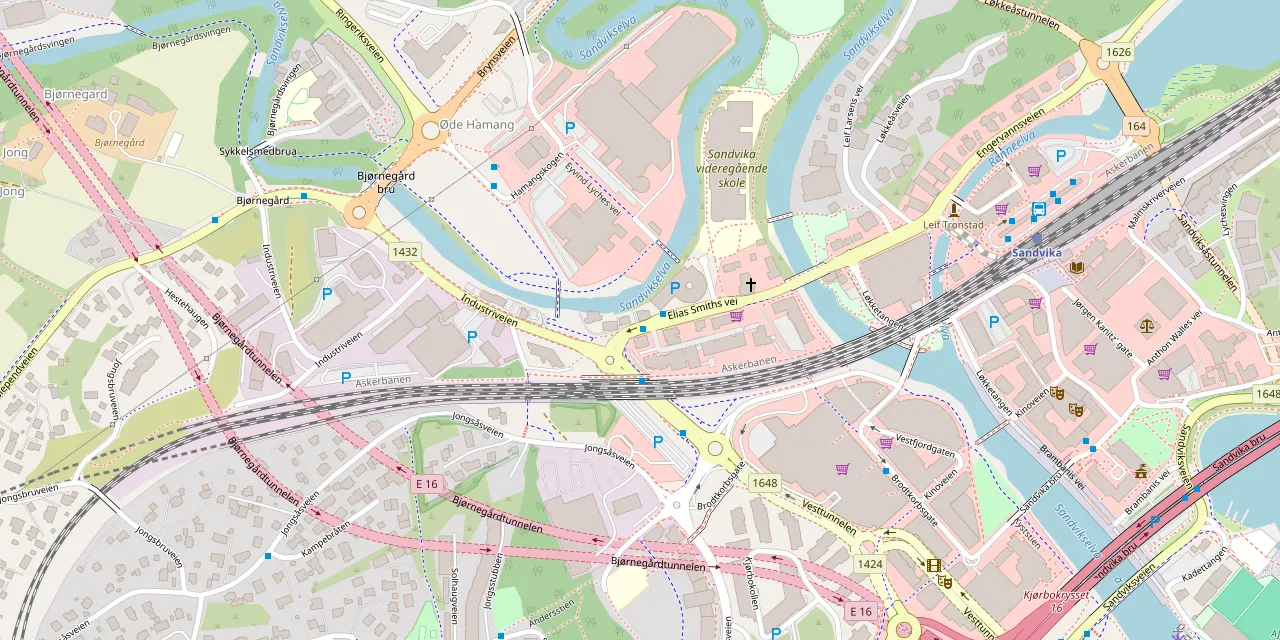
Visit us in Sandvika
Elias Smiths vei 25, 1337 Sandvika
Opening hours
- Monday–Friday
- 09:00–19:00
- Saturday
- 11:00–16:00
- Sunday
- Closed
Support: 24/7, every day
 Open in Google Maps© OpenMapTiles © OpenStreetMap